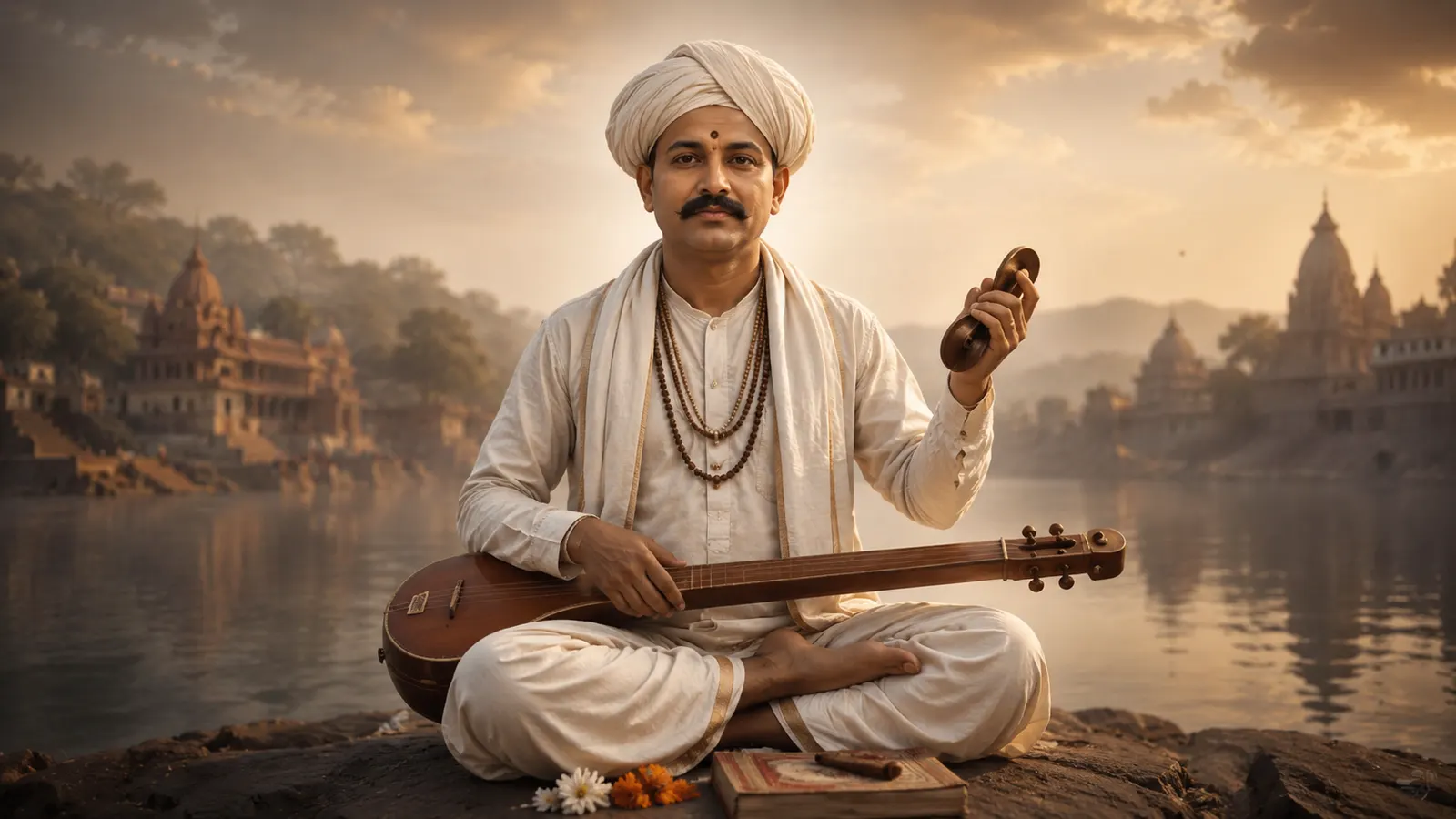
Tukaram
“A saint-poet whose songs still walk the road to Pandharpur.”
Why he matters
Tukaram did not escape life — he lived through loss, poverty, and doubt.
And yet, through it all, his voice became a bridge to the divine.
He wrote in the language of ordinary people, turning grief, longing, joy and surrender into poetry that could be sung together.
Centuries later, his words still travel with pilgrims walking toward Vitthal.
What you may feel with him


Letting go
When you don't need to control anymore.


Love in action
A quiet impulse to care, to give, without expecting anything back.


Need for respite
When life feels too heavy to carry alone.


Longing
A feeling that something essential is calling you.
Surrender
Not giving up — but finally letting yourself be held.


Being understood
The feeling that someone sees the pain you rarely put into words.


Quiet joy
A simple joy that does not need anything more.
Listen to his words
 Clarity
Easily thou knowest the heart though we speak not.
Tukaram, trans. Fraser & Marathe, The Poems of Tukārāma, Poem 87, "Consolation and happiness in God."
SurrenderI have cast down my burden; I am free from anxious care; the saints have entrusted me to Vitthoba.
Tukaram, trans. J. Nelson Fraser & K.B. Marathe, The Poems of Tukārāma, Poem 82, "Consolation and happiness in God."
 Strength
I am sorely troubled, sorely bestead! I have long been utterly weary.
Tukaram, trans. Fraser & Marathe, The Poems of Tukārāma, Poem 5, "Thoughts about the World."
LoveI am filled with compassion for the world, for I cannot bear to see it drowning.
Tukaram, trans. Fraser & Marathe, The Poems of Tukārāma, Poem 52, "His motives."
JoyTuka says, I need nothing else, there is complete joy in thy feet.
Tukaram, trans. Fraser & Marathe, The Poems of Tukārāma, Poem 129, "Descriptions and Invocations."
Saintliness is not to be purchased in shops, nor is it to be had for wandering. It is a life's bargain, and if you will not give your life to possess it, better be silent.
A moment from this life
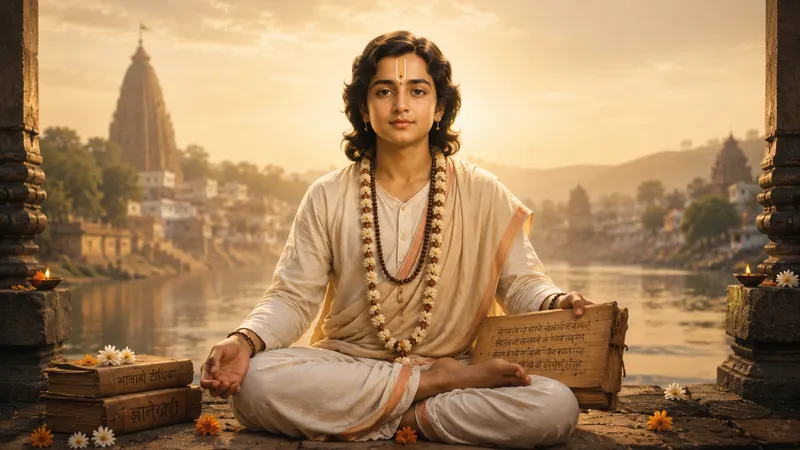
Tradition remembers a moment of crisis. Overwhelmed by loss, hardship, and the hostility of those who resented a low-caste man composing sacred verse in Marathi, Tukaram is said to have gathered his writings and given them to the Indrayani river.
Not out of anger. But out of surrender.
Devotional accounts hold that the verses returned days later, undamaged — a sign, to those who tell the story, that nothing truly given to God is ever lost.
His journey
A life shaped by loss, devotion, and surrender.
Born in Dehu
A simple beginning.
Faced famine & personal loss
Everything starts to fall apart.
Turned inward → devotion to Vithoba
A quiet surrender.
Wrote thousands of abhangs
Devotion finds a voice.
Became a voice of the people
His words belong to everyone.
Disappeared (mystical departure)
The story dissolves into mystery.
Places to encounter him
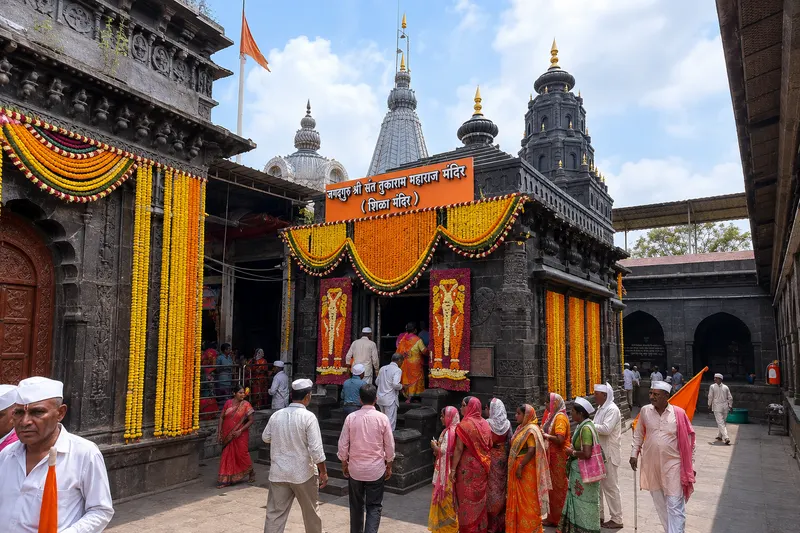
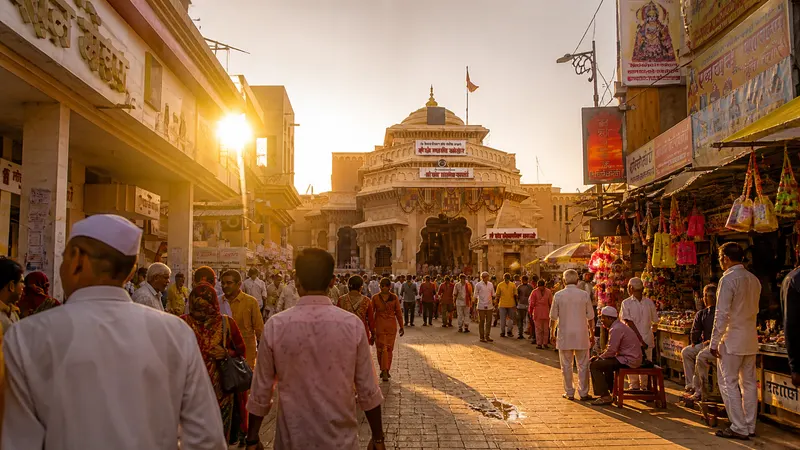
What stayed with you after meeting this guide?
His songs still walk toward Pandharpur — carried by every voice that sings them again.