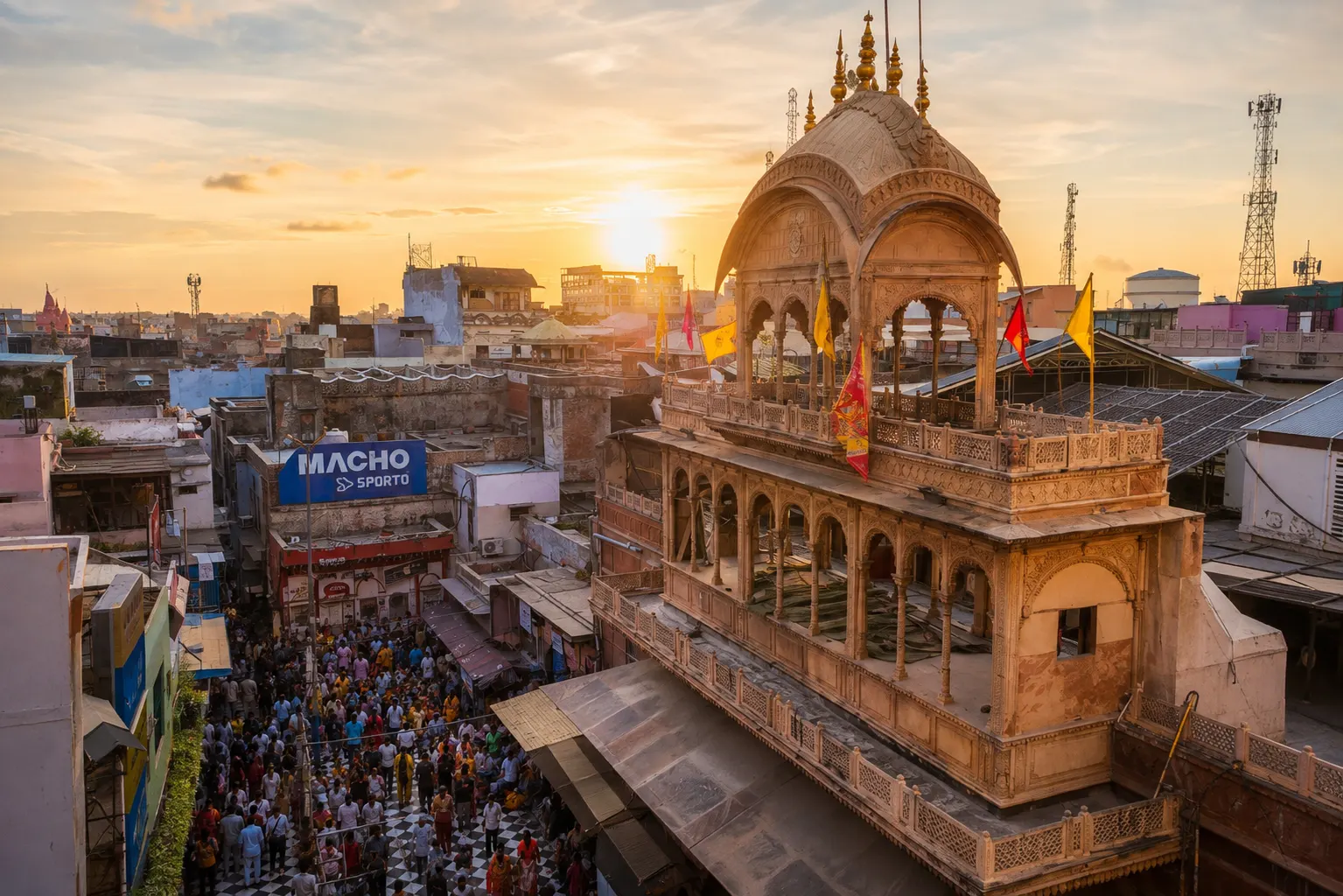
Banke Bihari Temple
“A glimpse can be enough to draw you back.”
What you may experience here
There is no long, open darshan here.
The curtain before Banke Bihari opens and closes again, over and over, through every hour the temple is open.
Devotees see the rhythm differently: a glimpse from Him is said to be complete enough not to need to last.
Come ready to wait, to watch, and to receive whatever the curtain gives — for as long as it gives it.
A single glance can be a whole conversation.
What is felt here
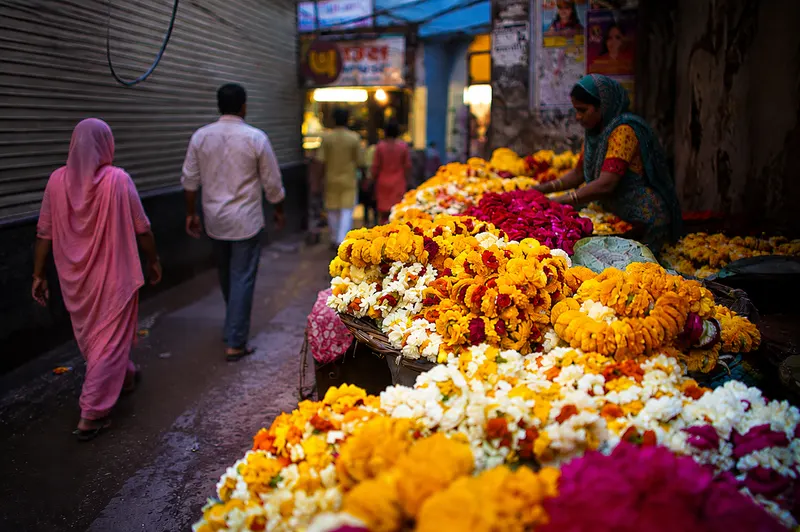

The Loving Gaze
He is said to withdraw if watched too long — as if his gaze at you is too intimate to hold without pause.
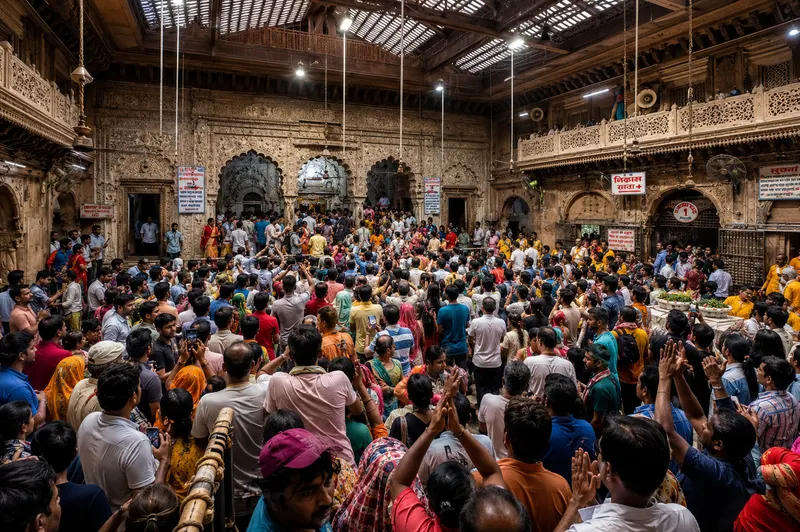

Come Back Again
The curtain closes before you are ready. What it leaves behind is not disappointment — it is a reason to return.
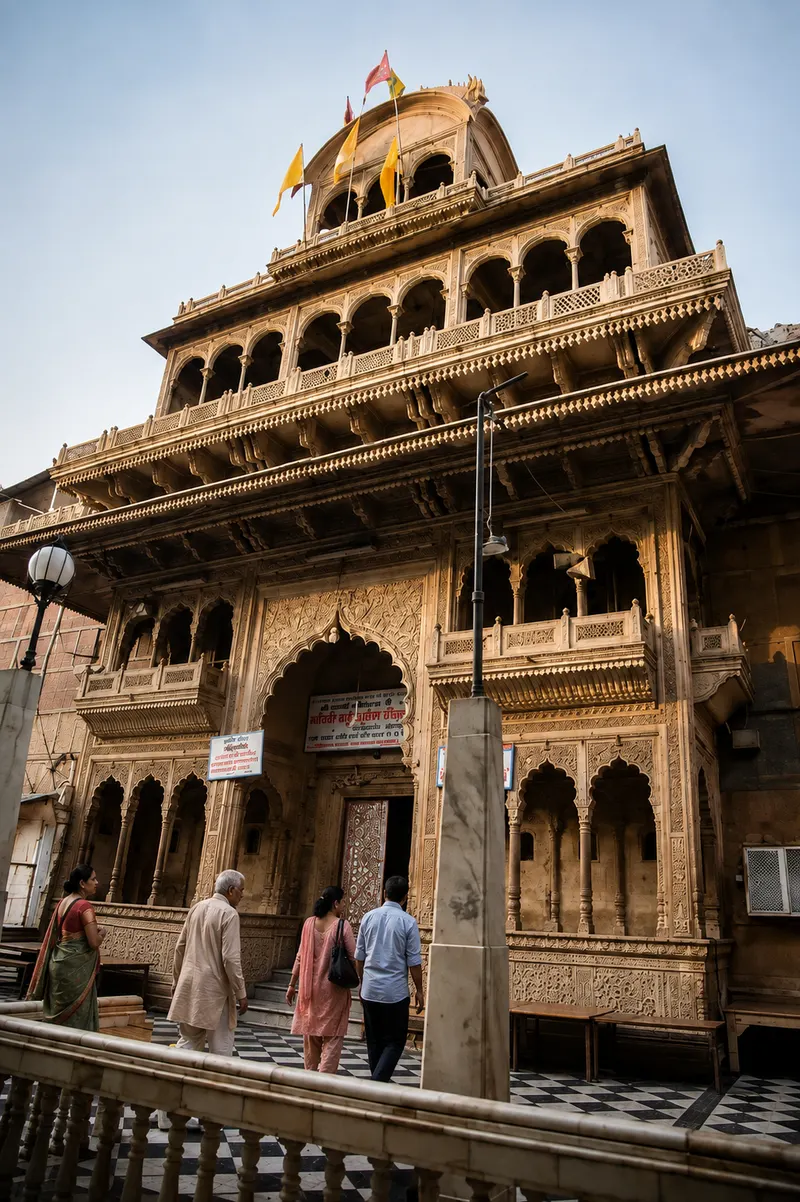

The Mystery Behind the Curtain
Something here resists being fully seen — and that, too, is part of what draws people back.

A Child at Play
Banke Bihari is worshipped as a child — woken gently, fed, dressed, put to rest. Nothing solemn is required of you here, only presence.

Offered, Not Explained
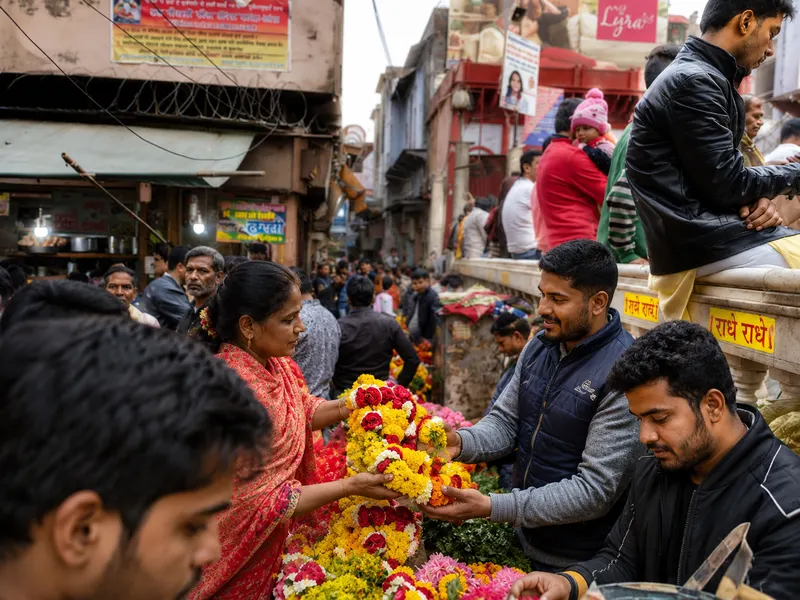
Devotion here is not something you need to explain. It is lived through care, waiting, song and presence.
A story from this place
Devotional tradition traces this temple's origin to Swami Haridas, a poet-saint and musician active around the turn of the 15th–16th centuries who meditated in the nearby forest of Nidhivan. His devotion to Krishna and Radha, tradition holds, was so complete that he did not worship them as two — he asked them to reveal themselves as one, and the image now known as Banke Bihari is understood by devotees as the result.
“Banke” means bent — the graceful triple-bend (tribhanga) of Krishna's neck, waist and knee. “Bihari” means the one who delights. Together, the name describes a stance, not a story: a form caught mid-play, not mid-lecture.
The image was worshipped at Nidhivan for generations before being moved, in the 1860s, to a newly built temple raised by Goswami families descended from Haridas's lineage, after a dispute among his followers over how the deity should be worshipped. The building you visit today is that temple, not the forest shrine where the tradition began — two distinct places, one continuous line of devotion.
Saints connected to this place
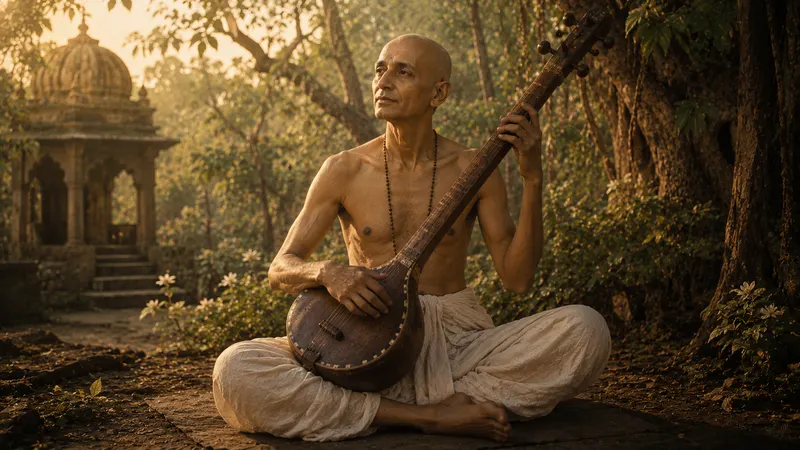
Banke Bihari is cared for, to this day, by Goswami sevayat families tracing their line back to Swami Haridas. Living behind the temple, they continue the rhythm their ancestors began: waking the deity, dressing him, feeding him, letting him rest.
Around them, Vrindavan keeps its own rhythm — kirtan in the nearby lanes, pilgrims staying a day or a season, the temple's narrow approach filling and emptying with each darshan window.
What began as one saint's private devotion in a forest is now sustained, daily, by hundreds of hands.
Your experience there
Watch for the curtain
It opens for only a few seconds at a time. Stay, and let it open again.
Listen for kirtan in the lanes
Devotional singing is part of the ordinary sound of this part of Vrindavan — not a performance, just daily life.
Let yourself wait
The curtain will close again. You don't need to hurry the next glimpse.
Notice what a child's presence asks of you
Banke Bihari is cared for as a child — no early bell to wake him, no rush to see him. Let that soften how you wait.
Do not expect one sustained darshan. Watch for the rhythm instead — curtain opening, a few seconds of stillness, curtain closing. Let it teach you something about attention: how little is needed, and how much can still be received.
Find your way there
Come during a darshan window. Everything here happens in short, repeated moments.
Opening Hours
Open in 9 hoursDarshan in Two Daily Windows
Summer: 7:45 AM – 12:00 · 5:30 PM – 9:30 PM
Winter: 8:45 AM – 1:00 PM · 4:30 PM – 8:30 PM
The temple closes between the morning and evening darshan windows.
Peak intensity
In 5 monthsJanmashtami — August/September
The birth of Krishna is Banke Bihari's most significant annual observance — the one day a Mangala Aarti is performed at dawn, since on every other day of the year the deity, worshipped as a child, is not woken early.
Holi — March
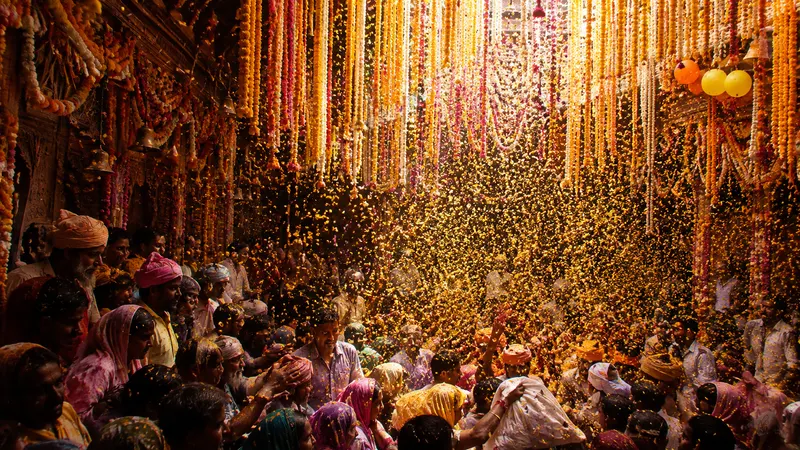
Vrindavan's Holi draws large crowds to Banke Bihari specifically, as one of the region's most significant sites for the festival of colour.
Quiet visit
Outside major festival periods, consider visiting away from the busiest moments around closing time. The rhythm of darshan remains the same: brief glimpses, repeated throughout the visit.
Official website
Location Tips
Banke Bihari is only open during its two daily darshan windows — plan around them rather than arriving at an arbitrary time, as you could for a Temple with continuous hours. Photography is not permitted inside the temple. During Janmashtami and Holi, expect very dense crowds and significant queuing.
What stayed with you after discovering this place?
The curtain falls. What you saw stays.